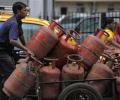
The world's largest cash transfer programme has eliminated around 40 million ghost connections
FIXES BY THE GOVERNMENT: Energy price fixed, tax issues linger.

The ministry has also decided to offer station for redevelopment by inviting open bids from companies.

The focus is on tapping all resources, even foreign agencies.

Government's fuel subsidy estimate was based on crude oil at $70.

India owes Iran around $8.8 billion primarily on account of crude oil imports.
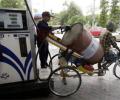
The growth, however, may not indicate a major revival of economic activity.
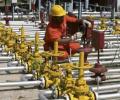
Pooling will also kick-start projects of Reliance Power, Torrent, Lanco.
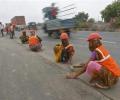
The number of infrastructure projects cleared by a monitoring group set up in the Cabinet Secretariat had increased consistently in the past year.

While three operational mines in Chhattisgarh had a capacity of 12 million tonnes (mt), six were yet to start production.

Companies use journalists as conduits.

Japan Plus to facilitate and fast-track investment proposals.
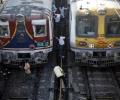
Budget is likely to focus on infrastructure creation in the N-E
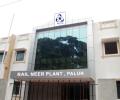
IRCTC has four Rail Neer plants.

Diesel prices for the Railways have come down from Rs 60.08 a litre in June to Rs 50.51 a litre now.
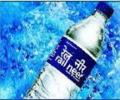
The first public-private partnership (PPP) initiative in bottled drinking water has taken shape at Amethi in Uttar Pradesh, with a Rail Neer plant set for commissioning.
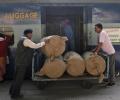
Freight earnings accounted for 65 per cent of IR's total earnings of Rs 144,167 crore (Rs 1,441.67 billion) in 2013-14.

The ongoing oil price decline is mainly a result of oversupply in the global market

Rail ministry pinning hopes on foreign partner and private capital

An analysis of year-wise movements of average global crude oil prices versus India's GDP reveals no inverse correlation, contrary to wide belief.
